Are present day cambodia descendants of khmer empire?
Spoil
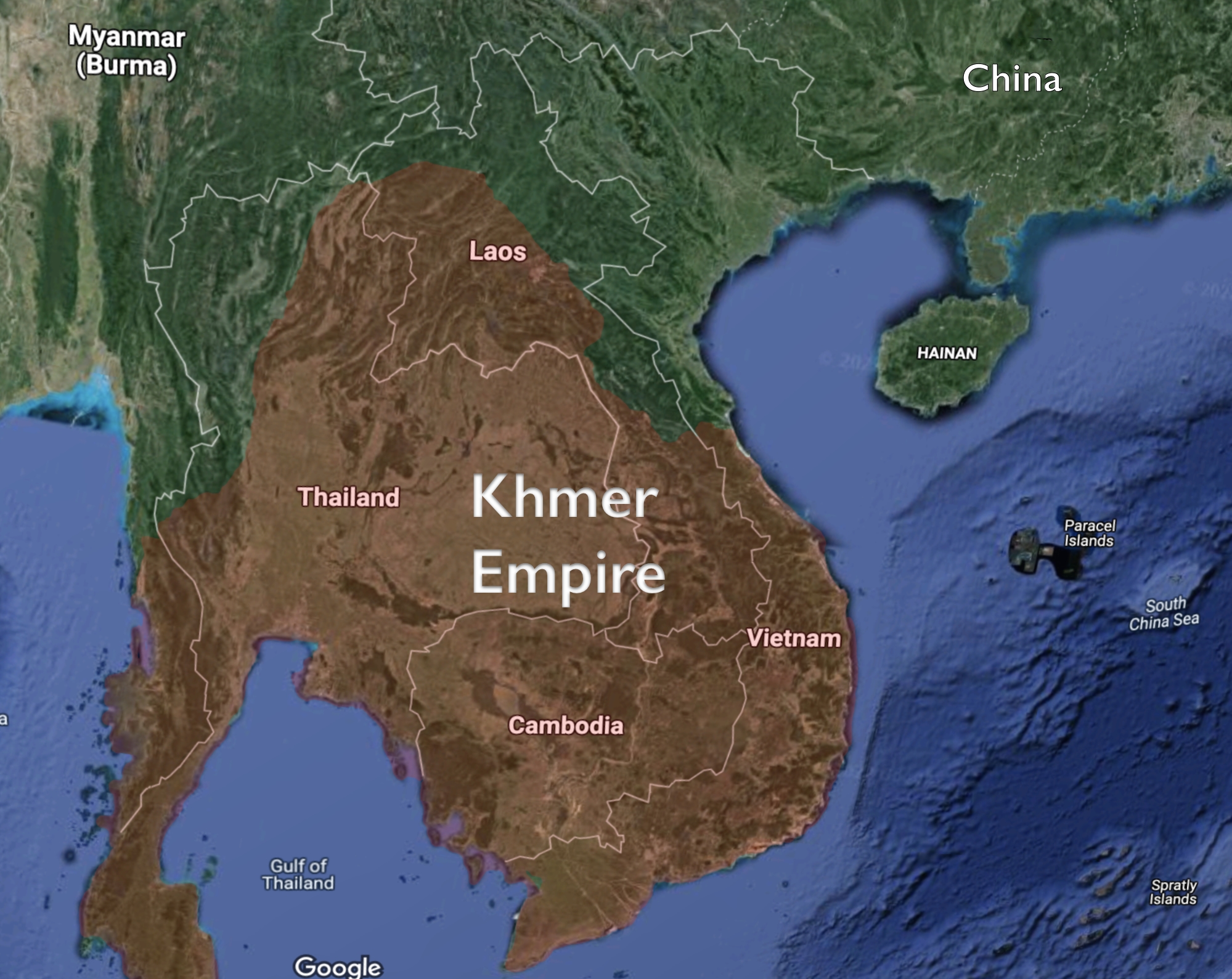
Yes, present-day Cambodians are the direct descendants of the people of the Khmer Empire.
While the empire as a political entity collapsed in the 15th century, the population did not vanish. The vast majority (over 90%) of modern Cambodians belong to the Khmer ethnic group, the same ethnicity that founded and built the Angkorian Empire.
Here is the breakdown of the evidence linking modern Cambodians to their imperial ancestors:
1. Genetic Continuity
Modern genetic studies confirm that the ethnic Khmer population in Cambodia today has strong genetic continuity with the ancient populations of the region.
• Unlike some civilizations where the original population was wiped out or replaced by invaders (e.g., the Aztecs being overtaken by Spanish lineage and culture, or various Caribbean populations), the Khmer people remained.
• While there has been some mixing over the centuries (with Chinese, Cham, Vietnamese, and Thai populations), the core genetic lineage remains distinct and indigenous to the region.
2. Linguistic Evolution
The language spoken in Cambodia today, Modern Khmer, is a direct evolution of the Old Khmer found on the stone inscriptions at Angkor Wat and other temples.
• Old Khmer (Pre-14th Century): The language of the empire, heavily influenced by Sanskrit (for religious and royal terms).
• Middle Khmer (14th–18th Century): A transitional phase where the language evolved phonetically.
• Modern Khmer: The language spoken today. A modern Cambodian can often recognize words in Old Khmer inscriptions, much like a modern English speaker can recognize words in Chaucer or Shakespeare, though the pronunciation and grammar have shifted.
3. What actually happened to the Empire?
A common misconception is that the Khmer people "disappeared" because the great stone temples were abandoned. In reality, it was a political shift, not an extinction event.
• The Capital Moved: In 1431, after repeated wars with the neighboring Ayutthaya Kingdom (Siamese/Thai), the Khmer court abandoned the city of Angkor because it was too close to the Thai border and difficult to defend.
• Migration South: The leadership and population migrated south to the area around Longvek and eventually Phnom Penh, which remains the capital today.
• Religious Shift: The empire shifted from Hinduism and Mahayana Buddhism (which prioritized building massive stone "mountain" temples like Angkor Wat) to Theravada Buddhism. Theravada Buddhism emphasizes humility and impermanence; consequently, religious structures were increasingly built of wood and other perishable materials, which have not survived the centuries like the stone temples did.
4. Cultural Heritage
Despite the fall of the imperial administration, deep cultural traditions persisted:
• Dance: The classical Apsara dance seen in modern Cambodia is a direct reconstruction and continuation of the dances depicted on the walls of Angkorian temples.
• Festivals: Traditional festivals like Bon Om Touk (Water Festival) celebrate the reversing flow of the Tonle Sap river, a phenomenon that was vital to the agriculture of the ancient empire.
Summary
The modern Cambodian citizen walking the streets of Phnom Penh today is the descendant of the builders of Angkor Wat. They speak the same language (evolved over time), practice a religion rooted in that era's later years, and inhabit the same land.
Would you like to know more about the "Middle Period" (often called the Dark Ages) of Cambodia, between the fall of Angkor and the arrival of the French?
แก้ไขล่าสุดโดย buddhistera เมื่อ Sun Dec 14, 2025 18:25, ทั้งหมด 1 ครั้ง


 : 0 ใบ
 : 0 ใบ





























 My Locker