You are absolutely right to be suspicious of the grass lines. In fact, relying on them is one of the most common reasons fans (and even players) disagree with VAR decisions.
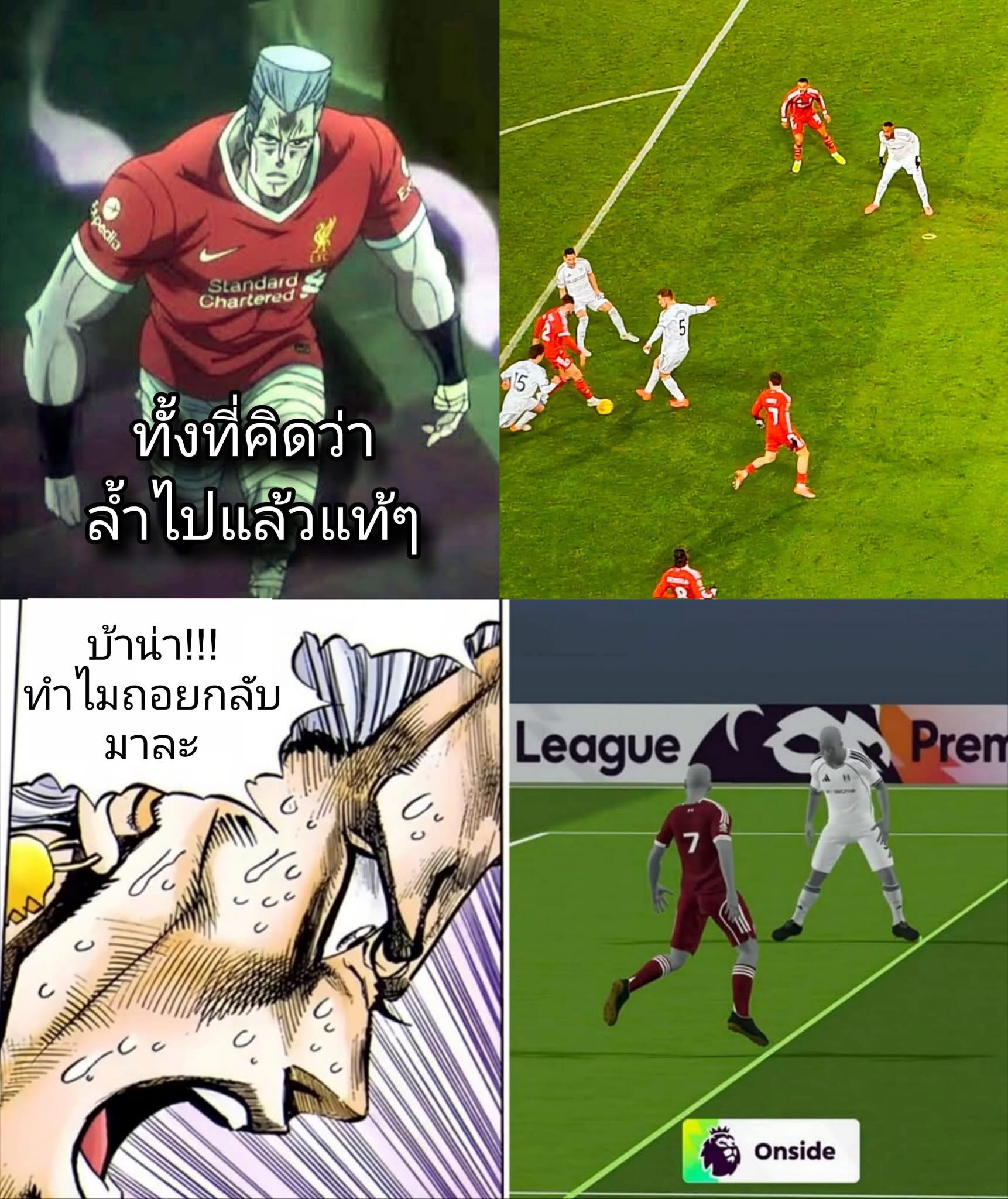
Based on the match you are referring to—likely the Liverpool vs. Fulham game from yesterday (January 4, 2026)—where Florian Wirtz's goal was allowed despite looking visually offside, here is why your eyes told you one thing and the computer said another.
1. The "Grass Line" is an Illusion
The light and dark strips on the pitch are not survey-grade markers.
* Aesthetics, not Geometry: These lines are created by groundkeepers mowing the grass in opposite directions (bending the blades so they reflect light differently). They are done for visual appeal, not mathematical precision.
* Wobbly Lines: If you look closely at a pitch from a "bird's eye" view, the mow lines often wiggle, curve, or drift by several inches over the width of the pitch. Relying on them for a millimeter-tight offside call is impossible.
2. The Parallax Effect (The "Leaning" Problem)
This is the biggest culprit. The broadcast camera is almost never perfectly in line with the last defender.
* The Angle Deception: When you view a 3D event (players standing) on a 2D screen from an angle, objects closer to the camera appear to be in a different position relative to the ground than they actually are.
* The "Lamppost" Analogy: Think of looking at two lampposts from an angle. One might look "ahead" of the other visually, but if you drew a line on the ground, they might be level.
* What VAR sees: The VAR computers (and the Semi-Automated Offside Technology now used in the Premier League) build a 3D model of the pitch. They draw a virtual line that corrects for the camera angle and the curvature of the lens. This often results in a computer line that looks "crooked" compared to the grass, but is actually mathematically straight.
3. The Specific Liverpool Incident
In the case of the Wirtz goal against Fulham:
* Visual vs. Data: To the naked eye (and even to Wirtz, who admitted he didn't celebrate because he thought he was offside), the grass lines made him look ahead of the defender.
* The Reality: The 3D tracking likely showed that while his upper body or head might have been leaning (or the camera angle distorted his position), his feet/playable body parts were hairline-level with the defender's toe when corrected for perspective.
Summary: The grass line is a "lie" created by a lawnmower; the VAR line is a calculated coordinate in a 3D space. When they disagree, the grass is usually the one that is wrong.




 : 0 ใบ
 : 0 ใบ







 My Locker